|
|
Spa Leadership Janice
Gronvold Interviews Julie Register for the Introduction to the Spa Industry class
at UC Irvine
Janice (1): Can you tell us about your background and how you got into the spa industry? Julie: I have a degree in mechanical engineering from Georgia Tech. Before immersing myself in spas, I worked for the first 20 years of my career as an engineer for a Fortune 10 company where I discovered and specialized in quality management. I also worked in management at a big 3 consulting firm and finally on my own as a quality management consultant for small medical device companies and their suppliers. In 1995, my husband took me on a surprise anniversary trip to Enchantment Resort in Sedona, Arizona (pre Mii Amo). I had my first massage (and later, my first watsu treatment) there, and it was literally a life-changing event. I left filled with the need to learn all I could about spas and spa treatments and with the desire to share this information with as many people as I could. In 1997, I created spas.about.com as a place for consumers to learn about spas on the Internet. In those days, there weren't that many spas and most of them did not have web sites. Soon the spa industry was growing at a clip of 20%/year, and spa professionals asked me to include information for them on the site, so I did. I continued to grow the site through 2003. At that time, my site was getting over a million page views each month. It won the Forbes Best of the Web Travel Site 2000, 2001, 2002, 2003 and Yahoo! Internet Life Best Spa Site 2002 awards. I was the recipient of The North American Travel Journalists Association 2003 Award of Excellence. Janice (2): How did the idea for Discover Spas come about? Julie: I wanted to create SpaQuality LLC, a company to help bring quality management to the spa industry. The odd, time-intensive and unprofitable demands of about.com didn't leave me time to do anything else, so I left about.com in 2003. I created SpaQuality LLC and my own web site, DiscoverSpas.com, a comprehensive on-line resource for spa consumers and spa professionals. Fortunately, I held the copyright of all the material I created for spas.about.com, so I had a big head start. By the way, you can still find about 4,000 of my articles on spas.about.com. Please feel free to search for them. I get paid every time someone clicks on one! Janice (3): Please tell us about Discover Spas and the different categories and resources you provide with the web site. Julie: The contents of the site are found in the site's navigation on the left side of each page.
Janice (4): You address a variety of spa categories on your site such as weight loss spas, maternity spas, and eco-friendly spas. Can you elaborate on niche markets in the spa industry and the audiences they serve? Julie: From those 10,000+ global spas in The Spa Register©, I've created subdirectories for those spas for those that offer services for couples (romantic spas), pre- and post-natal treatments (maternity spas), weight management programs (weight loss spas) and for those spas that have committed to incorporating sustainable earth policies and practices in the running of their businesses (eco-friendly spas). I've highlighted these offerings, because I think they offer something of extra value.
Janice (5): In your section of Best Spas with links to award winning spas recognized by Conde Nast, Mobil and the Trip Advisor, can you share with us the criteria in which spas are rated the process involved to earn the recognition of "best" spa? Julie: Most of these awards are determined by votes from the magazines', web sites' or organizations' members - a popularity contest, really. Condé Nast, Spa Finder, Travel + Leisure, Zagat, DaySpa, Spa, World Travel Awards, SpaAsia, TripAdvisor and Citysearch use this model. While these awards represent the voice of the public, they are also greatly influenced by the marketing efforts of the spas and are limited by the experience base of the readers. Mobil pre-selects spas from its member properties and sends secret shoppers to those spas to rate them on predefined criteria and awards them up to 5 stars. It probably is more representative of how good a spa is, but it is limited to its members and those member spas it chooses to look at. SpaQuality also offer an award to recognize any spa that meets the criteria of The International Standards of SpaExcellence(SM), a quality management framework for spas. The SpaExcellence(SM) program is based on a thorough, "open-book" examination of the spas' business practices as well as the findings of anonymous guest assessors to provide the guest perspective. Spas are rated on their Level of Excellence. I think we will have an opportunity to discuss this in more detail later. Janice (6): One of the articles required for the course is your article Spa Evolution, A Brief History of Spas. We have addressed the subject of the Ten Domains of Spa and would be interested in your perspective of modern day spas that represent good examples incorporating these domain elements. Julie:
I think the spas that come closest to covering the 10 domains are destination
spas - places where people often come for a lifestyle tune up. They offer healthy
food, exercise, massage, skin care, pools, etc. All 10 is a pretty big order to
fill. While many day spas offer some of these, they often don't have the resources
to offer more than a few.
Janice (7): Another topic you address in your article if that of ritual. Can you elaborate on this and how modern spas are continuing to address this ancient practice in modern day applications? Julie: In my opinion, the core of the spa ritual is what Prof. De Vierville identifies - cleansing, heating, treatment, and rest. Some spas include what they call a "ritual" at the beginning their treatments - a footbath, ringing of chimes, etc. - but they are usually stand-alone events that often seem odd or out of place to the guest. I see a lot of spas using the word ritual with spa packages - groups of treatments offered together sometimes at a discount. These packages often have a theme in their description, but the theme is usually lost in translation when the treatments are delivered, and there is no focus on the importance of the other elements of the spa ritual in the package - cleansing, heating or rest. In fact, many spas just don't offer cleansing, heating or rest at all. Many day spas, because of space or budget restraints, don't offer showers for cleansing or saunas, steam rooms or whirlpools for heating. I think many spas - all types of spas, in an attempt to become more profitable, don't offer their guests a proper place to rest after treatments. Space for quiet rooms and relaxation lounges, according to many spa consultants, are not income producing and would better for the bottom line if used for more treatment rooms or retail space. Treatment results are stressed and the overall spa experience is downplayed. But the guests are losing something valuable with this approach. You can also have the basic ritual and still feel like something's missing. In my opinion, the best spas
wrap the basic ritual - cleansing, heating, treatment, and rest - into an integrated
spa experience that includes:
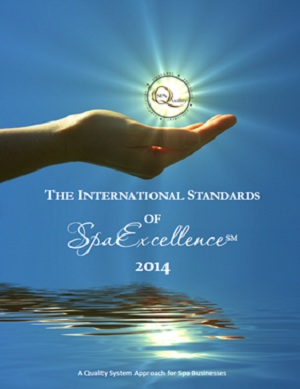
Janice (8): In addition to Discover Spas, you have also been involved in a significant undertaking with the upcoming release of the International Standards of Spa Excellence project. It offers a wealth of information and provides a model for a process-based system for optimization of management, operations and the guest experience. Can you share with us the background of this project and the features of the system? Julie: I've visited hundreds of spas worldwide, and I've had many less than stellar spa experiences. As a trained and experienced quality auditor, I couldn't help but notice gaps in spas' business practices. I recognized that these were all the direct result of underdeveloped quality management systems. I started seriously thinking about how to help the spa industry with this and planning what to do in 1999. Since quality was my area of expertise, I felt that sharing what I knew and what had already benefited many, many other industries - quality system standards - would be the best way to help the spa industry. It took a while, but in 2003, I invited Linda Bankoski, a quality expert with over 20 years of experience, to help me create SpaQuality LLC and the SpaExcellence(SM) program. We officially established the company in 2004 and, drawing from our vast knowledge and application of quality standards and spa experiences, we published the first version of The International Standards of SpaExcellence(SM) the same year. We continue to learn and grow and have updated and improved The Standards annually ever since. In fact, we just released the fourth edition - The International Standards of SpaExcellence(SM)2008 - this week. I'll just take a minute to talk about the inspiration of The International Standards of SpaExcellence(SM) - internationally accepted quality management system standards used by other industries including ISO 9000 (international quality management systems), ISO 14000 (environmental management standards), Malcolm Baldrige National Quality Award in the Untied States, the Canada Awards for Excellence from the National Quality Institute in Canada, The EFQM Excellence Award in Europe, OSHA (US health and safety), FDA Good Manufacturing Practices (US), TedQual (tourism education quality), JCAHO (US healthcare organization standards), and more. We translated, enhanced and organized the basic concepts of these standards and our own knowledge base into a complete spa quality management system that provides spas with what is necessary to achieve long-term success. A spa quality management system transforms the spirit and the intentions of what the spa wants to provide for its Guests into reality. In a spa, all processes interact to create the Guest experience. In order to be fully functional, the spa quality management system has to have an aim, a method and a way to measure its effectiveness. The aim of the spa quality management system is defined in the vision, mission, and values. The spa's methods are the interconnected processes. The spa's effectiveness is measured by assessments and key performance indicators. The spa quality management system is the invisible glue that transforms the spa's intention into the spa's Guest's and staff's experiences. While The International Standards of SpaExcellence(SM) describe what a comprehensive spa quality management system is, they are not prescriptive. They do not describe exactly how the spa must operate nor do they seek to make all spas alike. An excellent Guest experience is the result of a well managed, disciplined spa that provides confidence and meets or exceeds Guest expectations consistently. Successful Spas demonstrate effective management
in four key areas described in The International Standards of SpaExcellence(SM):
Spas all over the world have
purchased The International Standards of SpaExcellence(SM) since the first edition
was published in 2004. We are very excited about the just-released The
International Standards of SpaExcellence(SM)2008 because this year we've added
detailed guidance, tools and examples to help explain and illustrate the practical
application of The Standards. We added detail on risk management with the addition
of a risk analysis process and form that includes actual calculations to help
spa managers identify their greatest risks and help them prioritize their efforts
and resources. Some of the other tools and examples include:
These improvements to The Standards are based on our experiences with and knowledge of best practices in high performance organizations and recommendations from Spa consultants, owners, directors, GMs and guests. Competition in the spa industry continues to increase and consumers are becoming ever more selective in where they spend their discretionary income. Spas that provide confidence and meet and exceed their guests' expectations consistently are the spas that will survive these challenging economic times. Spa owners, spa directors, spa managers, spa consultants and general managers of hotels or resorts with spas will find the information found in The International Standards of SpaExcellence(SM)2008 extremely valuable. In addition to providing The International Standards of SpaExcellence(SM)2008, SpaQuality LLC offers education courses on The Standards and quality management tools, spa quality system assessments, anonymous guest assessments, certification for spa consultants and, for spas that seek public recognition of their management efforts, the SpaExcellence (SM) Certification process. Our intention is to provide
spas with everything they need to establish a complete spa quality system that
has integrity and which results in: Satisfied and Loyal
Clients, Janice (9): As we know, the spa industry is dynamic with continual change and diversification. What current and emerging trends do you find of particular interest and would like to share with the students? Julie: I don't
come out with a trends-to-watch list. SpaFinder
and ISPA
do an admirable job at that. However, there are two subjects I consider very important
to spas today and will mention
Janice (10): Can you share with us your comments or observations of the industry from a national and international perspective? Areas of growth, increased competition, diversification, consolidation, etc Julie:
To answer this, I am going to talk about the US spa industry and use information
from an article I wrote last year titled, It's
Time for The Spa Industry to Cross "The Chasm" and Step into "The
Tornado." You can find it in its entirety on DiscoverSpas.com. I've
watched the US spa industry undergo unbridled growth. I've seen parallel growth
of industries supporting spas - associations, conferences, expos, schools, consultants,
equipment manufacturers, supply providers and more. I've seen a plethora of new
therapies introduced - some efficacious, some silly. However, there is a fact
that isn't well publicized and, truth be told, I don't think most want to acknowledge.
There are a fair number of spas that go belly up. Of the spas I once included
in my database over the last dozen year or so, over 30% are no longer in business.
At least a dozen of the spas I've personally experienced are gone. One was destroyed
by Hurricane Katrina and not rebuilt. It did not surprise me that the others,
all but one day spas, were no longer in business. Generally, their treatments
and facilities were adequate but unremarkable. At some of these, however, the
customer service was simply appalling. The spas that remain
are in a constant battle to retain their customer base as the market becomes ever
more flooded with spas competing for the same consumer. I
believe we are experiencing a phenomenon identified by Geoffrey A. Moore in his
book Crossing
the Chasm. While it was written about the adoption of high-tech products,
I believe the same theories hold true for any product or service. Moore's model
states that any innovation will follow an adoption rate that roughly resembles
a bell curve.
This
curve is divided into five market sectors which represent groups of consumers
who share similar characteristics as they consider and then adopt new ideas and
products. The five groups are:
The most interesting part of the theory to me is the feature called "The Chasm" - a big gap between Early Adopters and Early Majority. Crossing The Chasm is a very difficult task that must successfully be accomplished in order to reach wide market success. It is the point at which many businesses fail. I think the US spa industry is stuck in The Chasm and has been there for a number of years. The US spa industry currently serves the faithful Innovators and Early Adopters but has yet to reach the Early Majority. It is the spa industry's challenge and responsibility to offer services and facilities that meet real consumer needs, are simple to use (accessible, affordable), provide value, can be a meaningful part of a lifestyle and are barrier-free (easily understood, non-threatening, trustworthy, safe, consistent). Individual spas are now focused on the competition when they should be focusing on cooperation. It will take a massive, cooperative effort for the spa industry to cross The Chasm and be accepted by the majority of the population. According to Moore in his book Inside
the Tornado: Strategies for Developing, Leveraging, and Surviving Hypergrowth
Markets, on the other side of The Chasm, The Tornado awaits - a make or
break time period where mainstream customers determine whether the product or
service takes off or falls flat. Spas must be up for that challenge and be able
to survive that scrutiny. At an individual spa level, I suggest ensuring the basics are in place. A spa will succeed if it offers value to its customers and staff and they become its advocates. Is the spa offering services and facilities that the local spa-goers (pre- and post-Chasm) value? How does it know? Has it asked them? Does it collect information from its Guests that it can actually use and take action on? Does it deliver excellent spa experiences consistently? Every time? Regular spa-goers are the first to notice differences and gaps. To make sure that the spa has the basics in place, a self-evaluation of the basics using The International Standards of SpaExcellence(SM) is an excellent starting point. Janice (11): For students who are seeking to cultivate employment opportunities in the industry, what positions and categories present the greatest need and what recommendations would you like to offer? Julie: I think the industry will always need skilled leaders and managers who know how to provide value and sincere care for their spas' guests and staff. This is a great time to be a student in the spa industry. So much formal education is offered compared with what was available just 10 years ago - 5 years ago for that matter! Education is a shortcut to but not a replacement for experience. I recommend students seek all the experience they can get. They should know what it's like to be a spa consumer, a spa receptionist, towel attendant, etc. It will give them perspective and make them better leaders and managers. I want to give your students some advice and a word of caution. Any spa teacher, consultant or organization who puts money or profitability first is flat-out wrong, in my opinion. Worse than that, they are dangerous and put the reputation of the entire spa industry at risk. There are quotes from two spa industry leaders at the 2007 ISPA conference that I would like to leave with: "Be
mindful of your ROI - Return on Intention." "Do a great job,
and the bottom line will take care of itself." May their wisdom guide your students throughout their careers - in the spa industry or in any industry! Thank you! |
|
| Advertise
| List Your Spa |
List Your Business
| Share
Your News | About This Site
| Disclaimer | Contact
| Newsletter | Site
Map Copyright 1997-2008 Julie Register, All rights
reserved |